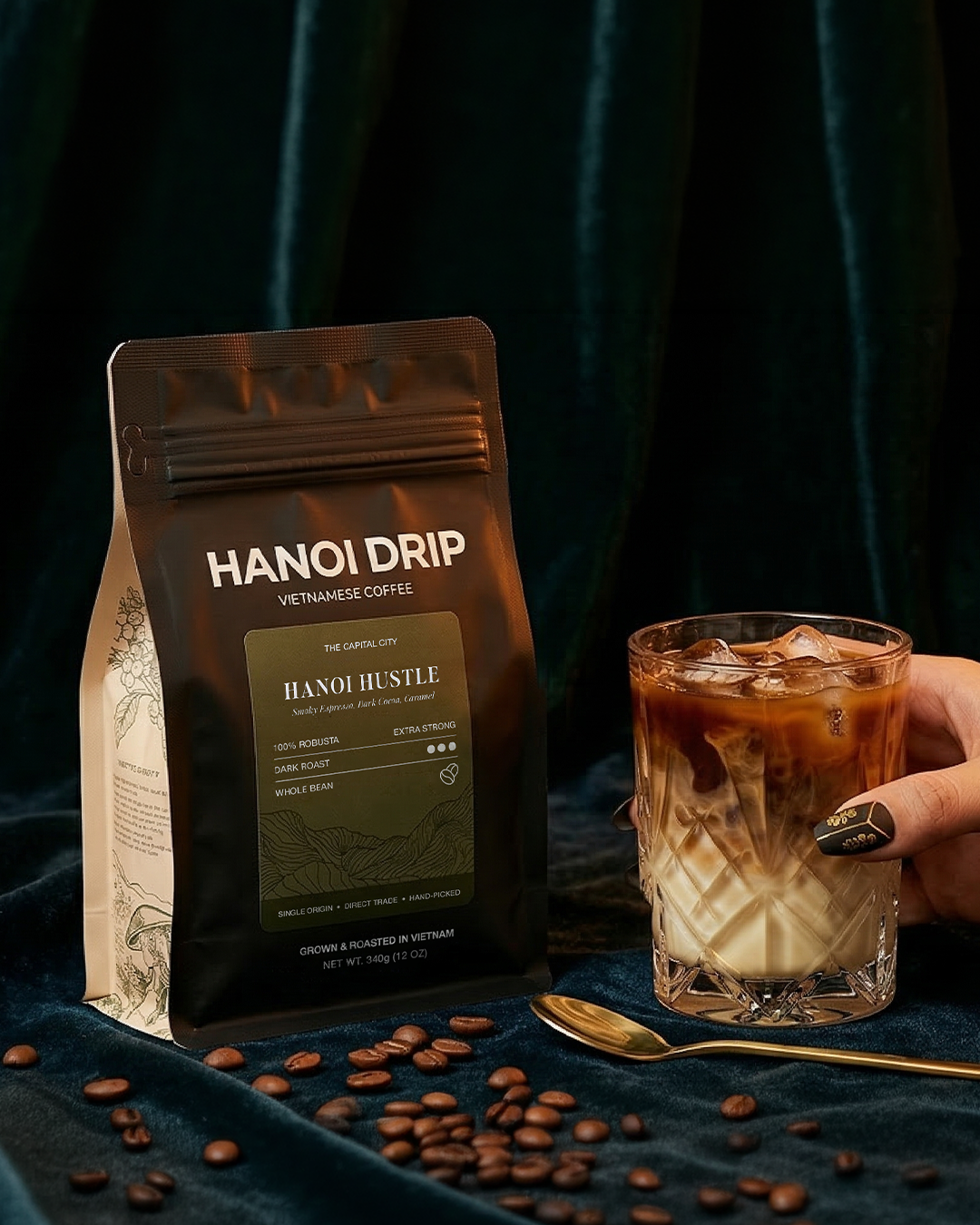
How Much Caffeine Is in Vietnamese Coffee? (Compared to a Latte)
How Much Caffeine Is in Vietnamese Coffee? (Compared to a Latte)
Answer: A typical 8oz cup of traditional Vietnamese phin coffee contains between 150mg to 200mg of caffeine. In comparison, a standard double-shot espresso latte contains about 120mg to 150mg of caffeine. The higher caffeine content in Vietnamese coffee is due to the use of Robusta beans, which naturally have nearly double the caffeine of the Arabica beans typically used in Western lattes, combined with the slow, concentrated phin brewing method.
By Linh Nguyen, Head Barista & Coffee Educator at Hanoi Drip | Last Updated: August 2026
The Robusta Factor: Why Vietnamese Coffee Packs a Punch
If you've ever had a traditional Vietnamese iced coffee (cà phê sữa đá) and felt an immediate, sustained energy boost, you aren't imagining things. The secret lies in the beans.
Vietnam is the world's leading producer of Robusta coffee. While most specialty coffee shops in North America proudly serve 100% Arabica beans, traditional Vietnamese coffee relies heavily on Robusta. Robusta beans naturally contain about 2.2% to 2.7% caffeine by weight, compared to Arabica's 1.2% to 1.5%. This means that before the coffee is even roasted or brewed, the raw ingredient inherently holds nearly double the caffeine potential.
The Phin Filter: Slow Drip, High Extraction
The brewing method also plays a crucial role in the final caffeine content. Traditional Vietnamese coffee is brewed using a phin—a small metal filter that sits atop the cup. Hot water slowly drips through the tightly packed coffee grounds over 5 to 8 minutes.
This prolonged contact time between the water and the coffee grounds allows for maximum extraction of caffeine and flavor compounds. The result is a dense, highly concentrated brew that resembles espresso in strength but with a much larger volume. When you combine high-caffeine Robusta beans with a slow-drip extraction, you get a beverage that is exceptionally potent.
Caffeine Comparison: Vietnamese Coffee vs. A Standard Latte
To put things into perspective, let's compare a standard serving of traditional Vietnamese coffee with a typical café latte.
| Beverage | Typical Serving Size | Estimated Caffeine Content | Primary Bean Type |
|---|---|---|---|
| Traditional Vietnamese Coffee (Phin) | 6-8 oz | 150mg - 200mg | Robusta |
| Standard Café Latte (Double Shot) | 12-16 oz | 120mg - 150mg | Arabica |
| Drip Coffee (North American Style) | 12 oz | 120mg - 160mg | Arabica |
As you can see, a smaller volume of Vietnamese coffee often delivers more caffeine than a much larger latte. This density of caffeine and flavor is why Vietnamese coffee is traditionally sipped slowly, often over ice and mixed with sweetened condensed milk to balance the intense, bitter profile of the strong Robusta brew.
Balancing the Buzz: Sweetened Condensed Milk
The high caffeine content and bold flavor of Robusta beans are exactly why sweetened condensed milk is the traditional pairing in Vietnamese coffee. The thick, sweet milk cuts through the bitterness and robust earthy notes of the coffee, creating a harmonious, dessert-like beverage.
While the milk adds richness and sweetness, it does not dilute the caffeine content. The strong caffeine kick remains, providing that signature jolt of energy that cà phê sữa đá is famous for.
Frequently Asked Questions
Is Vietnamese coffee stronger than espresso?
Yes, ounce for ounce, traditional Vietnamese coffee brewed with Robusta beans in a phin filter often contains more caffeine than a standard Arabica espresso shot.
Why does Vietnamese coffee give me the jitters?
The combination of high-caffeine Robusta beans and the high sugar content from the sweetened condensed milk can cause a rapid energy spike, which some people experience as "jitters," especially if they are sensitive to caffeine.
Can I get decaf Vietnamese coffee?
True decaf Vietnamese coffee is rare because Robusta beans are not commonly decaffeinated. However, some modern shops may offer a decaf Arabica alternative brewed in a phin style, though the flavor profile will differ significantly.
How much caffeine is in a Vietnamese iced coffee?
A standard serving typically contains between 150mg and 200mg of caffeine, depending on the specific ratio of coffee to water and the exact beans used.
Is it okay to drink Vietnamese coffee every day?
Yes, for most adults, consuming 150-200mg of caffeine daily is well within safe limits (usually recommended up to 400mg per day). However, be mindful of the sugar content from the condensed milk if consumed daily.
Ready for a Caffeine Boost? Visit Hanoi Drip Coffee in Vancouver
Experience the authentic, high-energy kick of traditional Vietnamese coffee at any of our three Vancouver locations. Whether you need a morning jumpstart or an afternoon pick-me-up, our signature Robusta blends are ready for you.
- Richmond: 12560 Bridgeport Rd #140, Richmond, BC V6V 2N5 | (604) 270-0876 | Mon–Fri 9am–6pm, Sat–Sun 9:30am–5pm
- Rupert Street: 3779 Rupert St, Vancouver, BC V5R 5H1 | (604) 336-7747 | Mon–Sun 8:30am–7pm
- Mount Pleasant: 691 E Broadway, Vancouver, BC V5T 1X4 | (604) 559-9566 | Mon–Sun 9am–7pm
Explore our Menu to see our full range of drinks, or check out our Wholesale Coffee options to bring the Hanoi Drip experience to your own café or home.
Written by
Hanoi Drip Coffee
Vancouver's Vietnamese Coffee Specialists
Hanoi Drip is Vancouver's home for authentic Vietnamese phin drip coffee. Our team sources single-origin Robusta and Arabica from the Central Highlands of Vietnam, brews the traditional way, and shares everything we know about Vietnamese coffee culture — from egg coffee recipes to phin brew guides.


Experience It In Person
Visit Hanoi Drip in Vancouver
Three locations in Richmond, Renfrew-Collingwood, and Mount Pleasant. Every drink brewed through the traditional phin filter.